


Customize Walk In Temperature Humidity Test Chamber
Case Study: How a Customised Walk-In Chamber Shipped to the USA Solved Site, Door and Sample-Loading Challenges
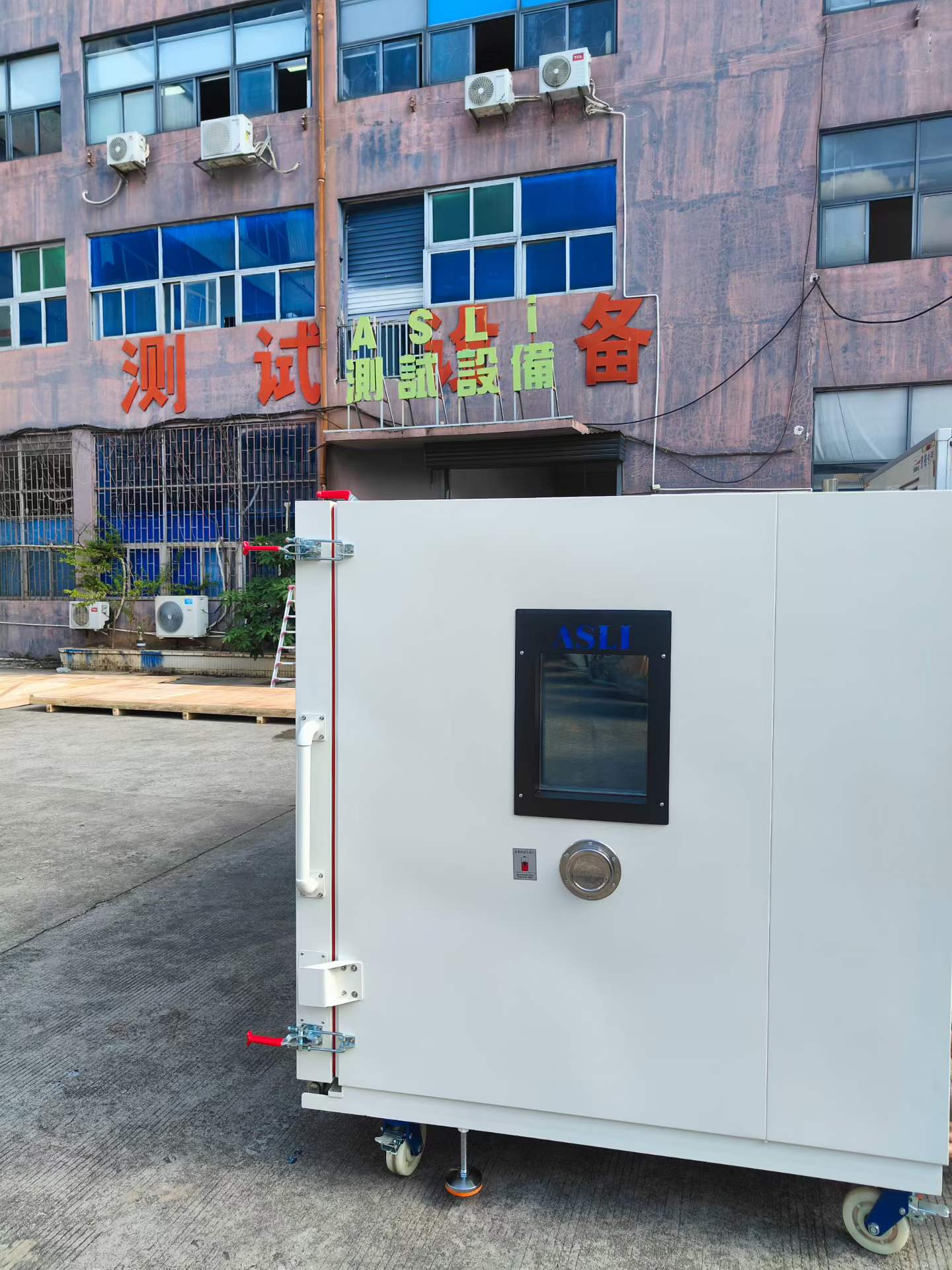
Introduction
A standard walk-in temperature humidity test chamber does not always fit the real installation site. Space can be limited, the sample trolley may need a wider door, and the door opening direction can interfere with the test workflow.
At ASLI TEST, we design and build customised environmental test chambers around the customer’s samples, site conditions and test method. This article shares a recent US case, the technical parameters behind the design, and how we solved site space, chamber size, sample loading and special door direction in one project.
Why Choose a Customised Walk-In Chamber?
A customised walk-in temperature humidity test chamber is designed for the actual application, not only for the catalogue. Typical reasons for customisation include:
- Large or heavy samples that cannot be loaded into standard chambers
- Limited installation space or a narrow access corridor
- Sample trolleys, racks or lifting equipment that require a specific door size
- A door opening direction that must not block the walkway
- Specific temperature and humidity test profiles
- Remote monitoring, data logging or local power requirements
Case Study: A Customised Walk-In Chamber Shipped to the USA
Solving site space, chamber size, sample loading and special door direction in one design.
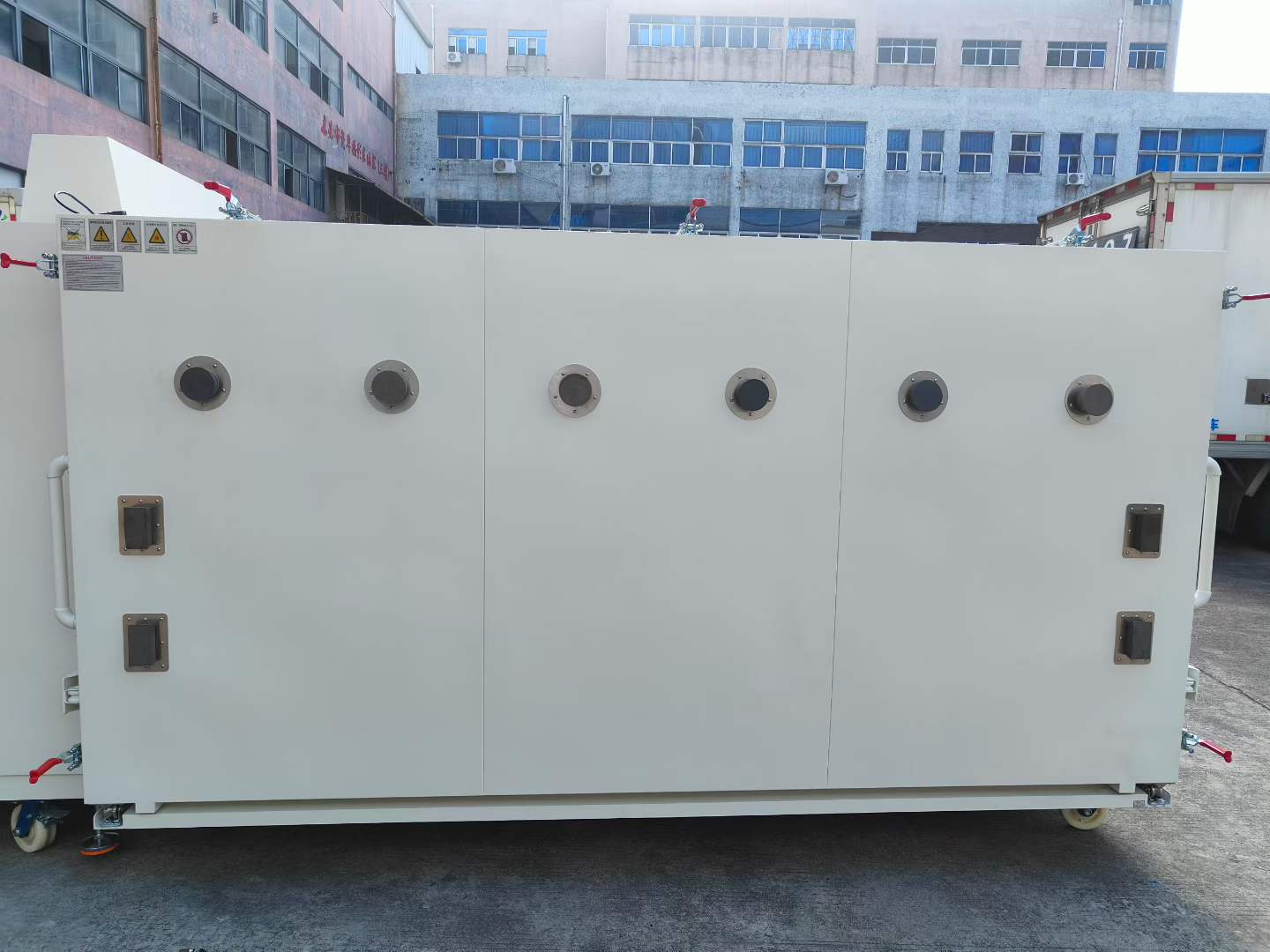
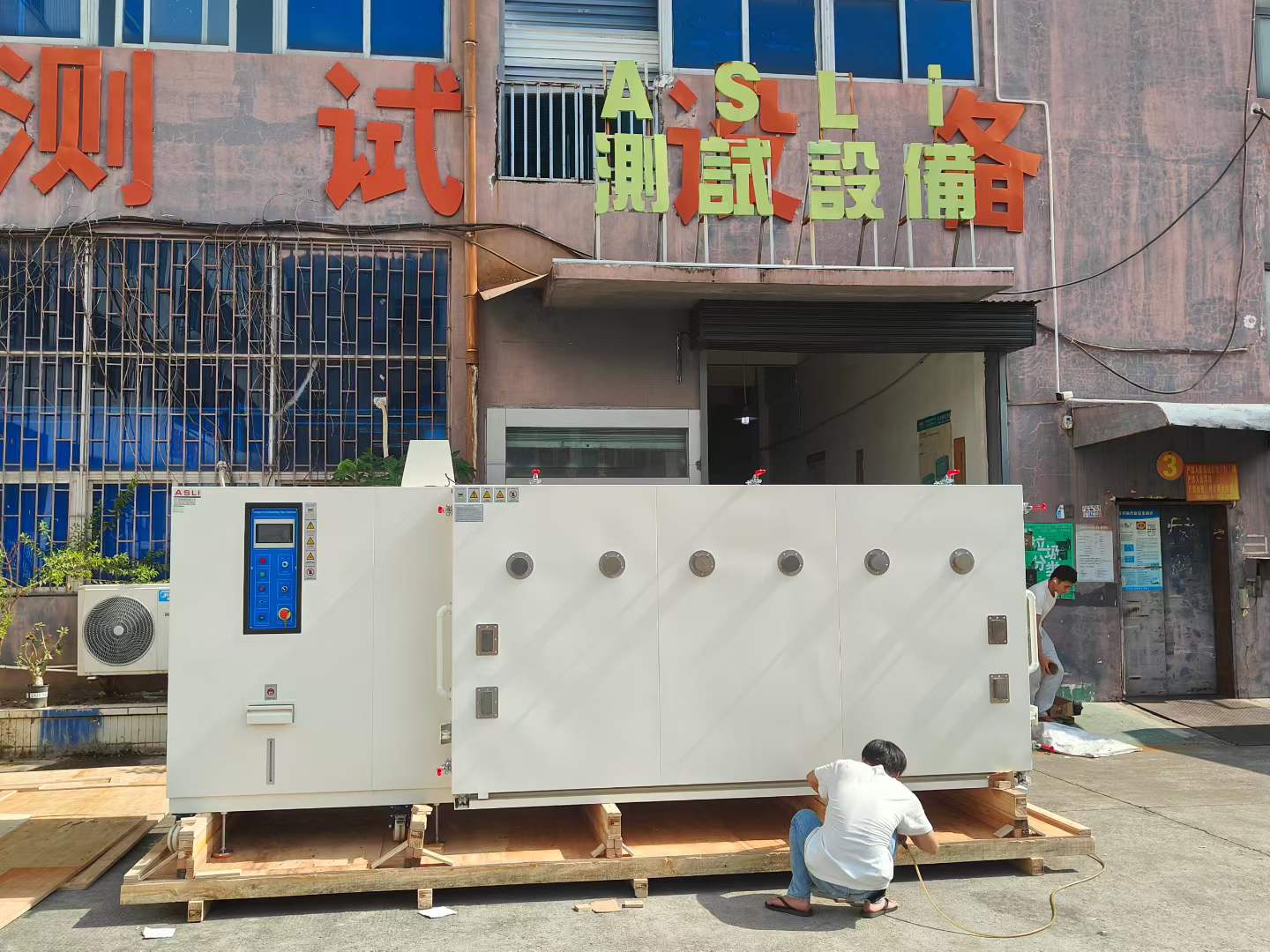
A US customer required a walk-in temperature humidity test chamber for large samples. The available installation area was limited, and the sample had to be moved in and out by trolley. A standard chamber door would have opened into the main walkway, making sample loading difficult and interfering with the test area.
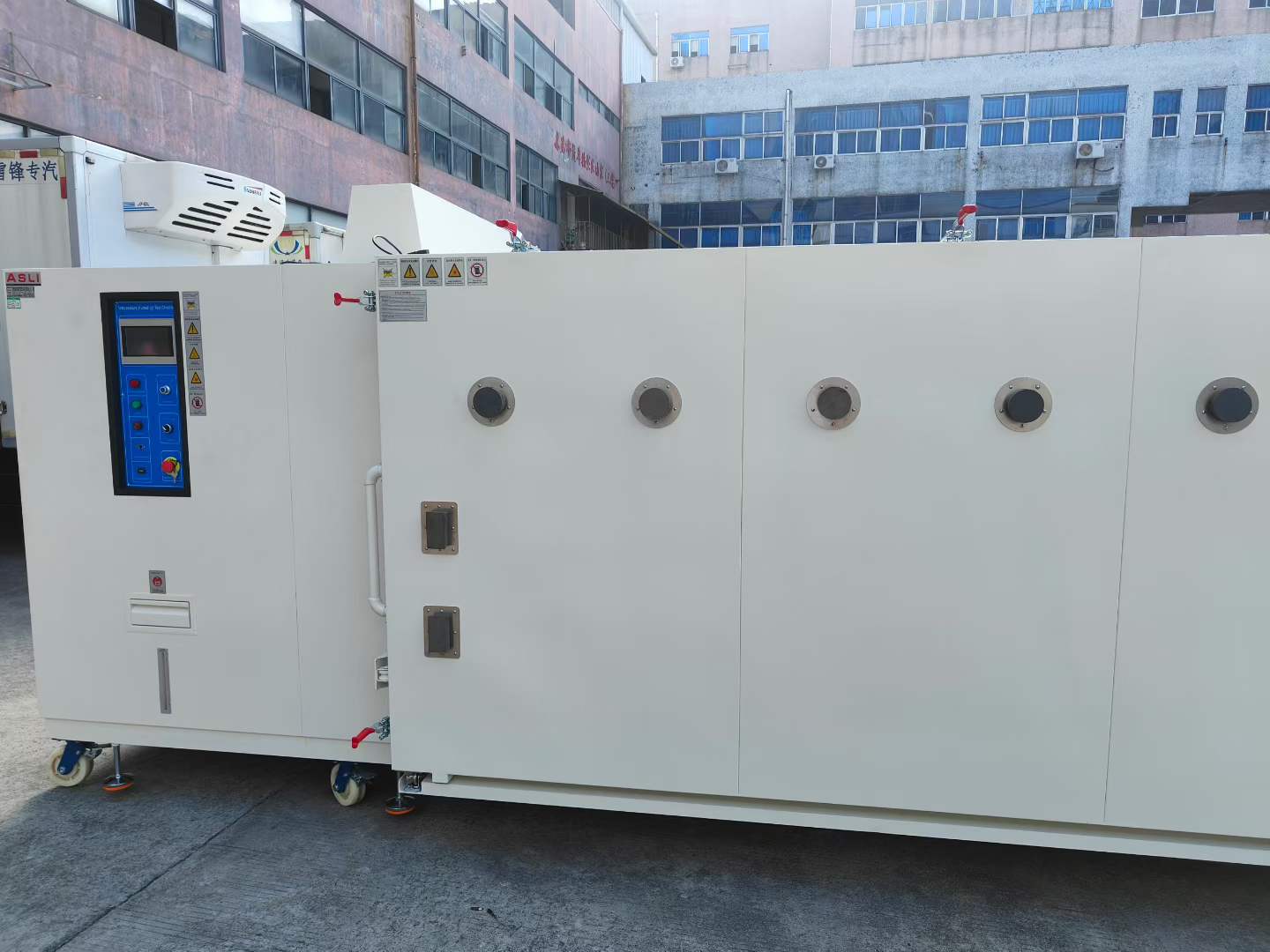
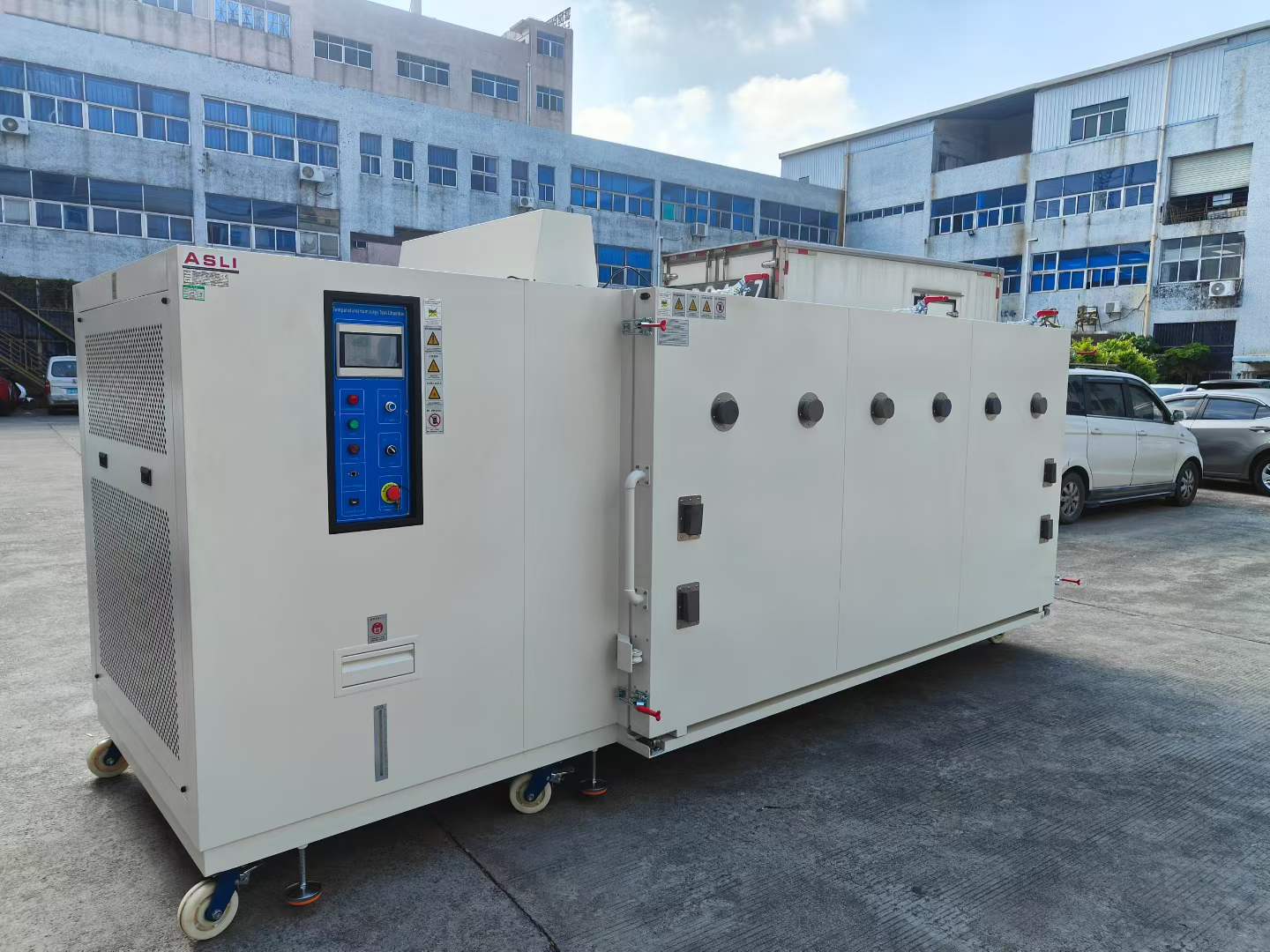
Before production, we reviewed the site dimensions, sample size, trolley height and daily test workflow. The chamber was customised with:
- Site-fitted dimensions: Internal and external dimensions were adjusted to the available floor space while keeping service access for the controller and maintenance.
- Custom door direction: The hinge position and opening direction were changed so the door would not block the walkway or the trolley path.
- Door size and access ramp: The door width and height were matched to the customer’s trolley and sample rack, with a ramp to simplify loading.
- Sample-loading layout: Internal shelving and rack positions were planned to support sample loading without disturbing air circulation or sensors.
- Test-oriented door design: Door opening, sensor placement and controller position were checked together to avoid interference during sample loading and temperature humidity testing.
- US power and shipping preparation: The electrical configuration was confirmed for the US site, and the chamber was packed in reinforced wooden cases for overseas shipping.
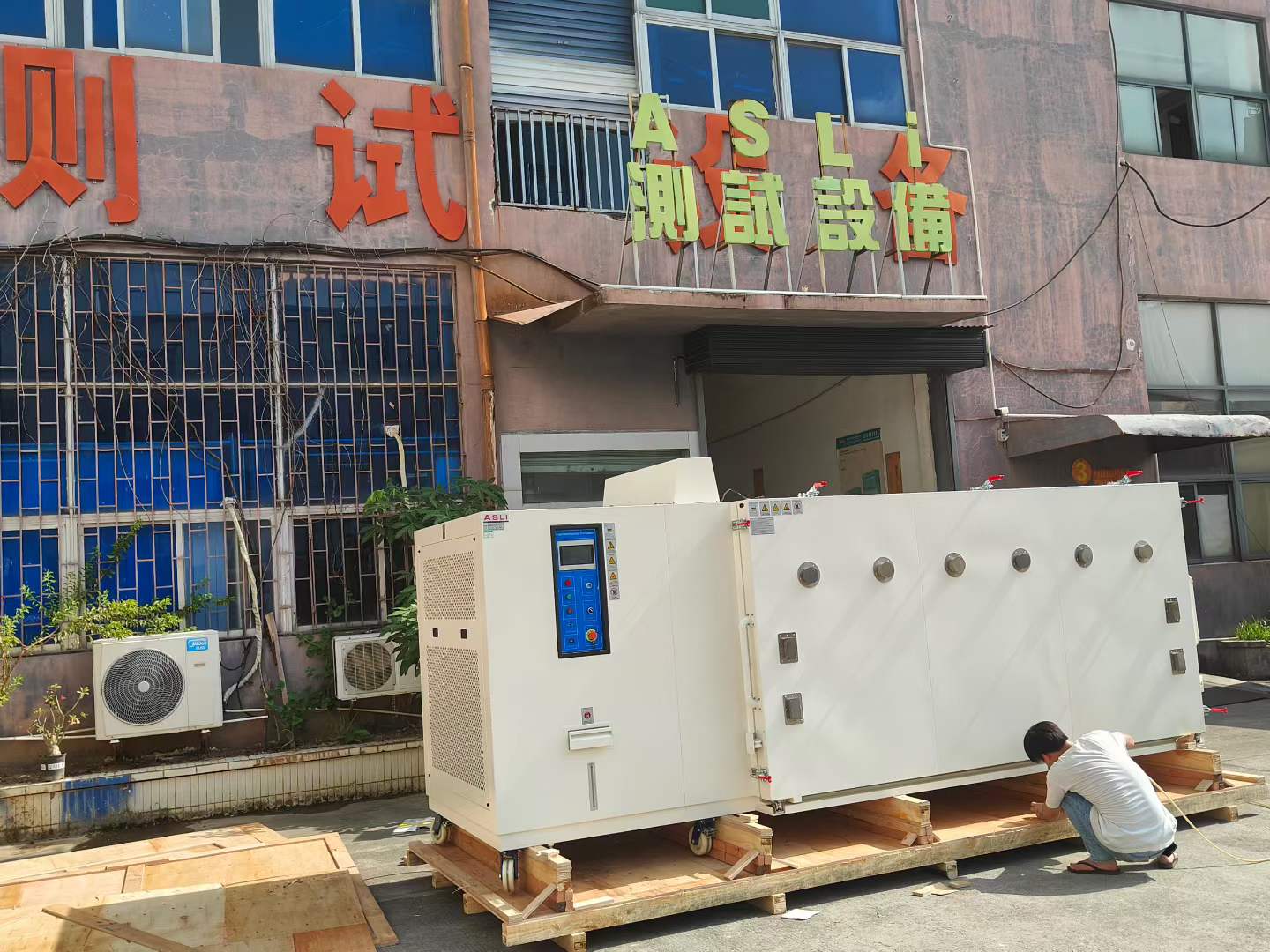
After installation, the customer could move samples in and out by trolley without moving other equipment. The customised door direction kept the walkway clear, and the chamber layout matched the actual test workflow rather than forcing the site to adapt to a standard chamber.
Result: A site-fitted walk-in temperature humidity test chamber was delivered to the USA, solving space limitations, sample loading and door interference in one customised design.
Key Customisation Options
Temperature and Humidity Range
The chamber is designed around the required test profile, including temperature range, humidity range, heating and cooling rate, and temperature uniformity.
Internal Dimensions and Layout
Width, depth, height, door position, shelving and access method can be customised. If trolleys or racks are used, the entrance, ramp and internal layout should be planned together.
Control System
A reliable controller should support programmable profiles, real-time curves, alarm records and data export. For overseas customers, an English interface and remote monitoring options are often important.
Safety and Protection
Customised chambers can include over-temperature protection, compressor protection, emergency stop, door safety and independent alarm systems.
Technical Specifications
The table below shows the standard configuration range for the THR-series walk-in temperature humidity test chamber. Internal dimensions are factory-direct and fully customisable; the temperature and humidity ranges below can be matched to your test standard.
| Parameter | Specification |
|---|---|
| Model | THR-volume — low-temperature options A~F |
| Internal Dimensions | Factory direct — internal dimensions customizable |
| Temperature Range | Low: (A) 25 °C / (B) 0 °C / (C) −20 °C / (D) −40 °C / (E) −60 °C / (F) −70 °C High: 80 °C (80 °C ~ 150 °C optional) |
| Humidity Range | 20% ~ 98% R.H. (10–98% / 5–98% available as special optional condition with dehumidifier) |
| Indication Resolution / Distribution Uniformity | 0.1 °C; 0.1% R.H. / ±2.5 °C; ±3.5% R.H. |
| Control Accuracy | ±0.5 °C; ±2.5% R.H. |
| Temperature Rising / Falling Velocity | Rising approx. 0.1 ~ 3.0 °C/min Falling approx. 0.3 ~ 1.0 °C/min (Faster temperature change rate is optional) |
| Cooling System | Water-cooled or air-cooled |
| Compressor | French Tecumseh brand; Germany Bitzer brand |
| Protection Devices | Fuse-free switch; compressor overload protection; high/low coolant voltage protection; over-humidity & over-temperature protection; fuses; fault warning system; water short-storage warning protection |
| Optional Accessories | Slope for cart; recorder; water purifier; dehumidifier |
| Power | AC 380 V (±10%), 50/60 Hz, 3-phase 5-wire |
Note: the compressor brand is written as Bitzer in this table. Please confirm the exact brand spelling with the technical team before publishing.
Professional Notes: How to Read These Parameters
The specification table is more than a list of numbers. The following notes explain what each parameter means in a real test programme.
Temperature range (A~F)
Options A to F set the low-temperature limit from 25 °C down to −70 °C. The correct option depends on the lowest temperature in your test profile, not on the lowest temperature available. A chamber specified far below the required limit adds cost and energy consumption without improving the test.
Humidity range
The standard range is 20%–98% R.H. Lower humidity (10%–98% or 5%–98%) is available as a special option with a dehumidifier. At low humidity levels, the chamber load, door openings and fresh-air exchange have a greater influence on stability, so the test method should be agreed before the chamber is configured.
Uniformity vs control accuracy
Distribution uniformity (±2.5 °C; ±3.5% R.H.) describes the variation across the working volume. Control accuracy (±0.5 °C; ±2.5% R.H.) describes how closely the controller holds the setpoint. A large sample load, dense shelving or a poorly planned sensor position can worsen uniformity even when control accuracy remains good — this is why sample layout is part of the chamber design.
Temperature change rate
The standard rising rate is approximately 0.1–3.0 °C/min and the falling rate approximately 0.3–1.0 °C/min. Faster rates are optional. If your test standard requires a defined ramp rate, state it in the inquiry so the cooling capacity and compressor configuration can be sized correctly.
Cooling system and compressor
Water-cooled and air-cooled options are available, with Tecumseh and Bitzer compressors. The choice depends on ambient conditions, site utilities and maintenance arrangements at the installation site.
Protection devices
The protection list covers compressor overload, over-temperature, over-humidity, coolant voltage and water shortage. For unattended long-duration tests, these protections and the fault warning system are as important as the control accuracy.
Power supply
The standard configuration is AC 380 V (±10%), 50/60 Hz, three-phase five-wire. Site voltage should be confirmed before shipment; for the US market, the electrical configuration must be agreed at the design stage.
Case Analysis: Why the Door and Layout Matter
Returning to the US case, the specification table explains why the customisation was necessary.
Site space limited the external dimensions
The chamber had to fit the available floor area while still allowing service access to the controller and maintenance points. Internal dimensions were customised, but the external footprint was governed by the room.
The door direction affected sample loading, not only access
With a standard hinge position, the door would have opened into the walkway and forced the operator to move the trolley around it. Changing the hinge side and opening direction kept the trolley path straight and reduced the time the door stayed open — which also helps limit humidity fluctuation during loading.
Door size and ramp were matched to the trolley
A door that is too narrow or a step at the entrance makes loading slow and increases the risk of disturbing sensors or shelving. The ramp and door height were specified together with the trolley dimensions.
Sample layout was planned against uniformity
Dense samples placed close to the air outlet can create local temperature differences. Shelving and rack positions were agreed in advance so the working volume, sensor position and air circulation remained consistent with the test method.
Factory debugging reduced site risk
Before packing, the chamber’s control system, temperature and humidity performance, safety functions and door operation were checked. For an overseas project, this is the stage where configuration errors are cheapest to correct.
In short, the customisation was not cosmetic. Site dimensions, door direction, loading method and sample layout all influence how the chamber performs against the parameters in the table.
Quality Control and Factory Debugging Before Shipment
For a customised chamber, design review and factory debugging are essential. Before shipment, ASLI TEST checks the chamber configuration, control system, temperature and humidity performance, safety functions and door operation. This helps reduce installation risk and ensures the chamber is ready for site commissioning.
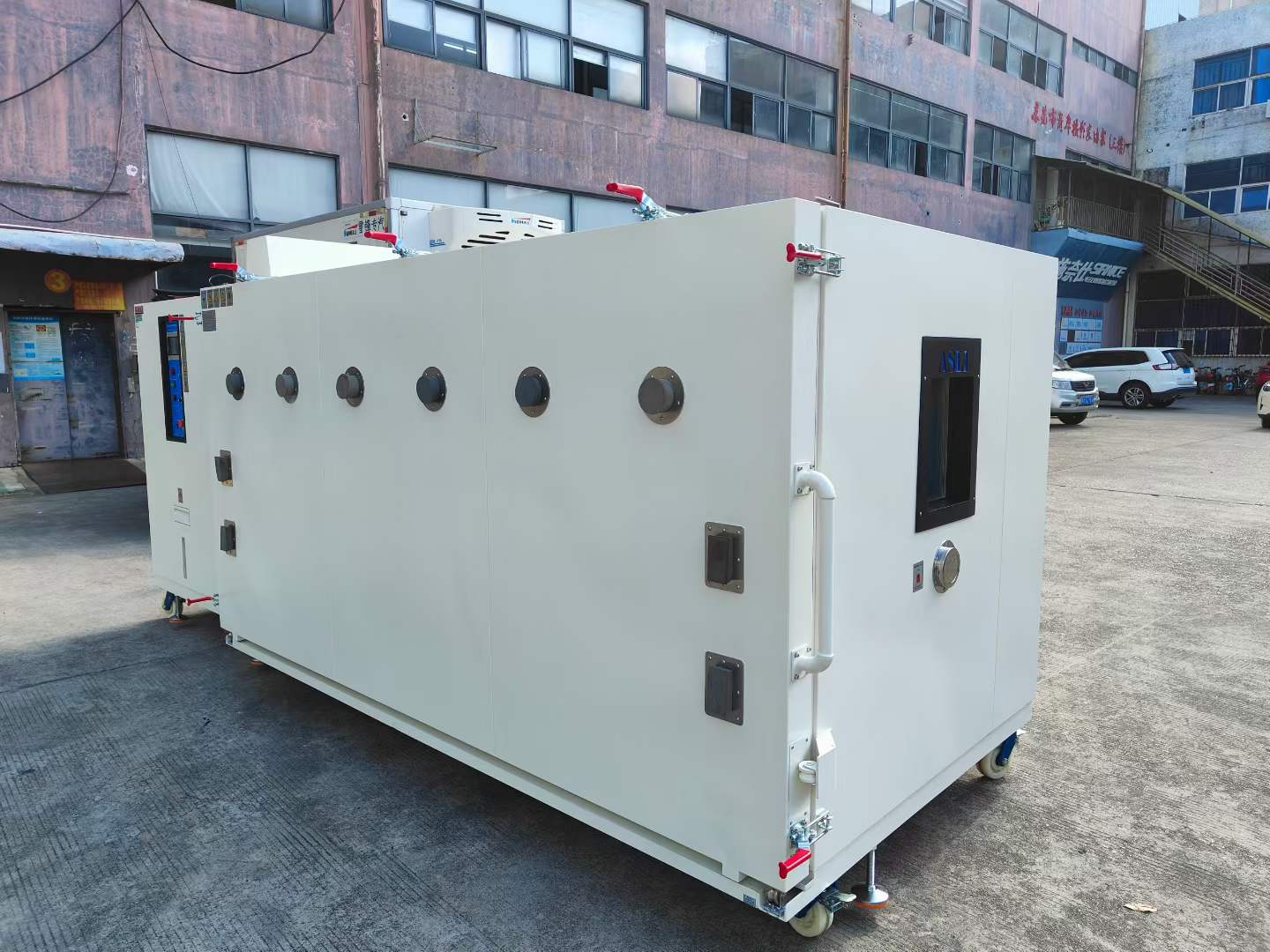
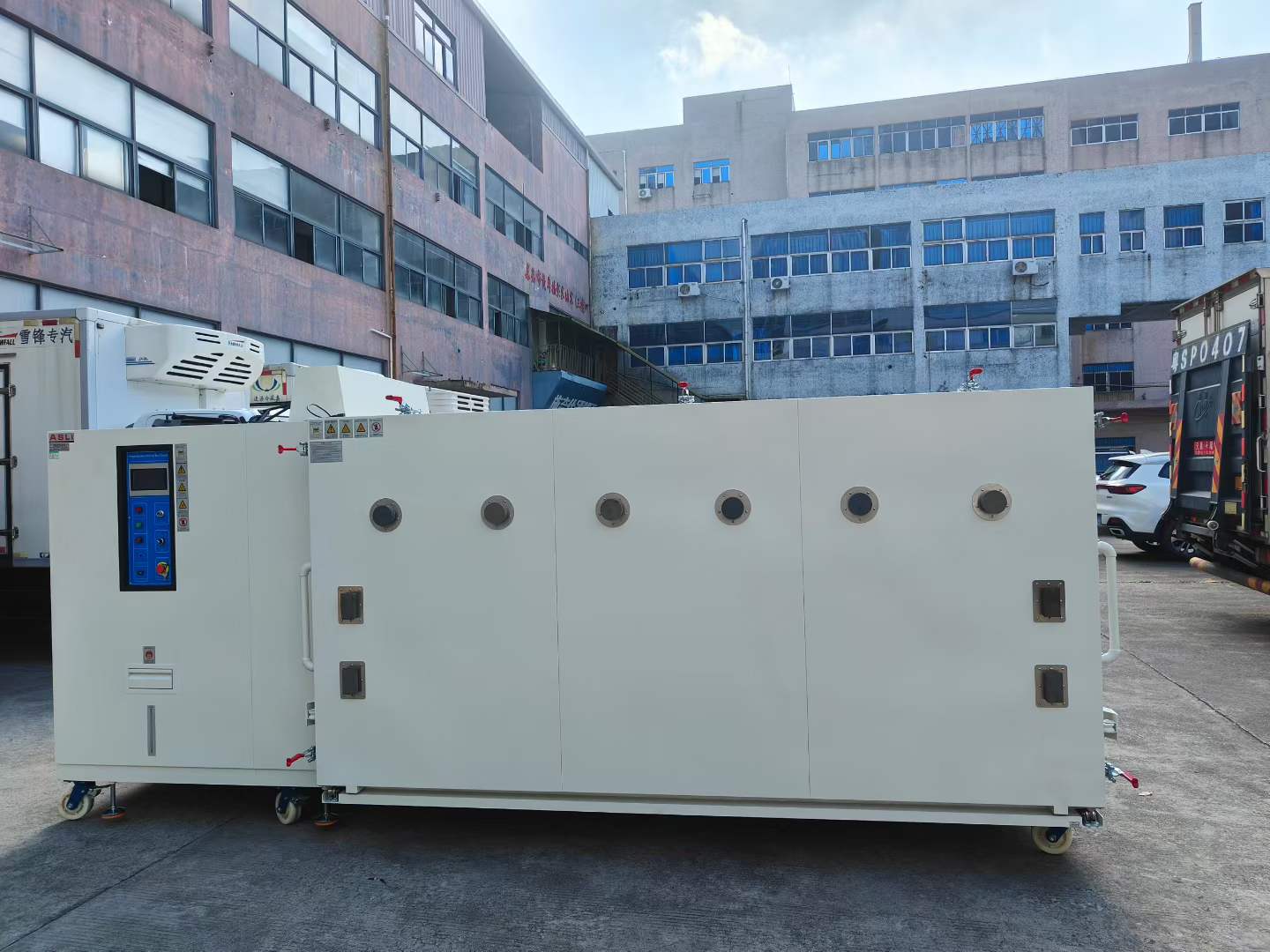
We also prepare design confirmation drawings, packing details and shipping documents so the customer can plan site preparation in advance.
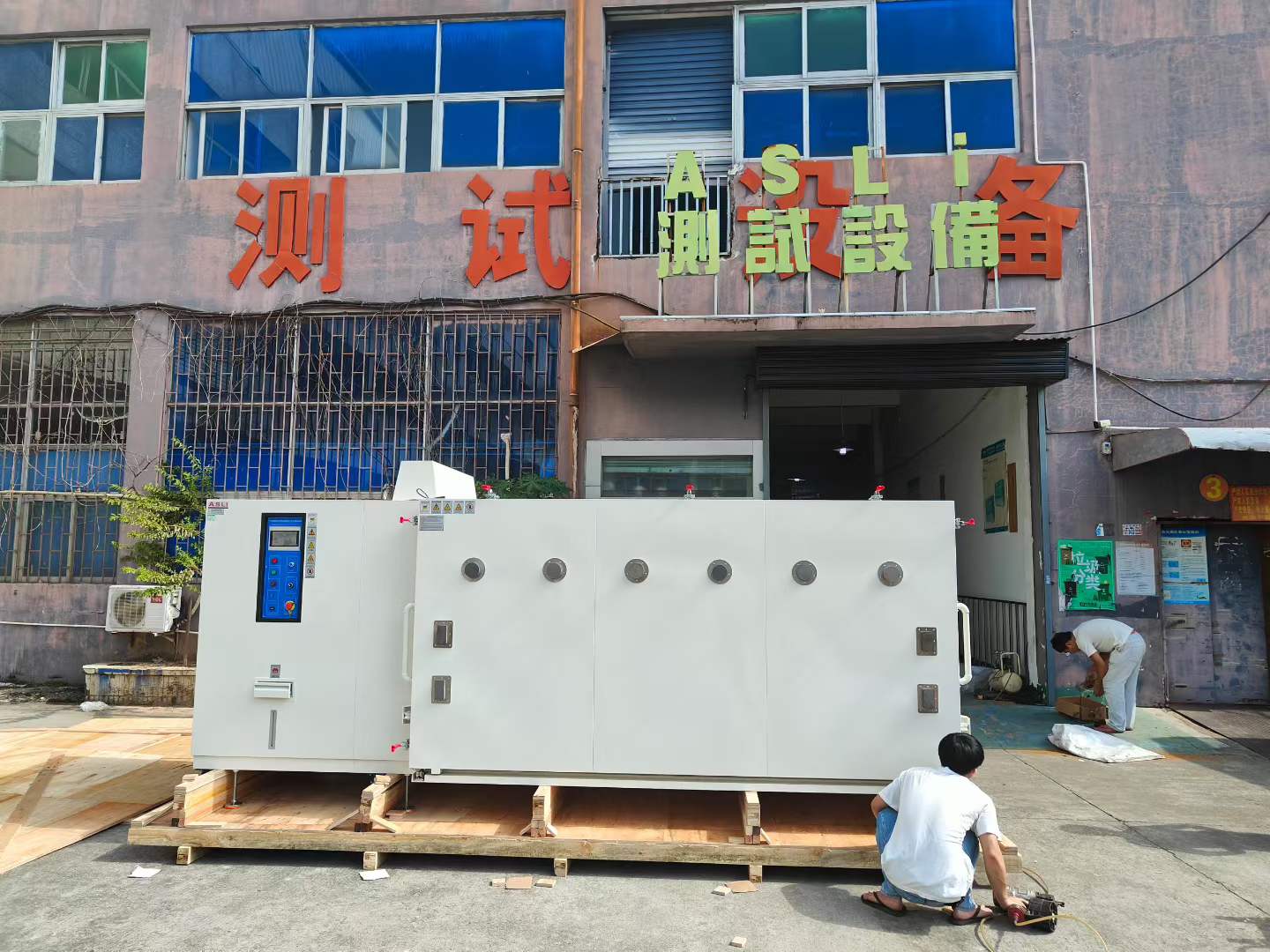
Regular Production and Shipment Updates
ASLI TEST remains active in production and overseas shipping. We regularly share production progress, factory testing and shipment updates with customers, so you can see that your chamber is moving forward — not only at the quotation stage.
Applications
Custom walk-in temperature humidity test chambers are used for:
- Automotive parts and battery components
- Electronics and PCBA assemblies
- New energy products
- Building materials
- Pharmaceutical and packaging tests
- Large industrial components
The final design should always be based on sample size, test standard and loading method.
How to Specify Your Custom Chamber
Before requesting a quotation, prepare the following information:
- Sample size, weight and quantity per test
- Required temperature range and humidity range
- Test standard or internal test method
- Loading method: manual, trolley or crane
- Installation site dimensions and access route
- Power supply and local voltage
- Data recording and remote monitoring requirements
Providing these details helps ASLI TEST propose a more accurate chamber configuration and avoid later modification.
FAQ
What is a walk-in temperature humidity test chamber?
It is a large environmental test room that allows operators to walk inside for loading samples. It controls temperature and humidity according to a programmed test profile.
Can the chamber size be customised?
Yes. Width, depth, height, door position, shelving and access method can be customised based on your samples and installation space.
Can the door opening direction be changed?
Yes. The hinge position and opening direction can be designed to suit the site layout, trolley path and test workflow.
What is the difference between uniformity and control accuracy?
Uniformity describes the temperature and humidity variation across the working volume; control accuracy describes how closely the controller holds the setpoint. Both should be considered together with sample load and layout.
How long does customisation take?
Lead time depends on chamber size, configuration and order schedule. Confirm the design drawing and technical agreement before production.
Can it support remote monitoring?
Many control systems support data logging and remote monitoring. Specify your requirements during the inquiry stage.
Request a Customised Solution
Tell us your sample size, test range and installation conditions. The ASLI TEST team will recommend a suitable custom walk-in temperature humidity test chamber configuration for your project.
Email us for a customised quotation
Send your test requirements
ASLI TEST
Email: marketing@aslitesting.com
Website: https://www.aslitesting.com/